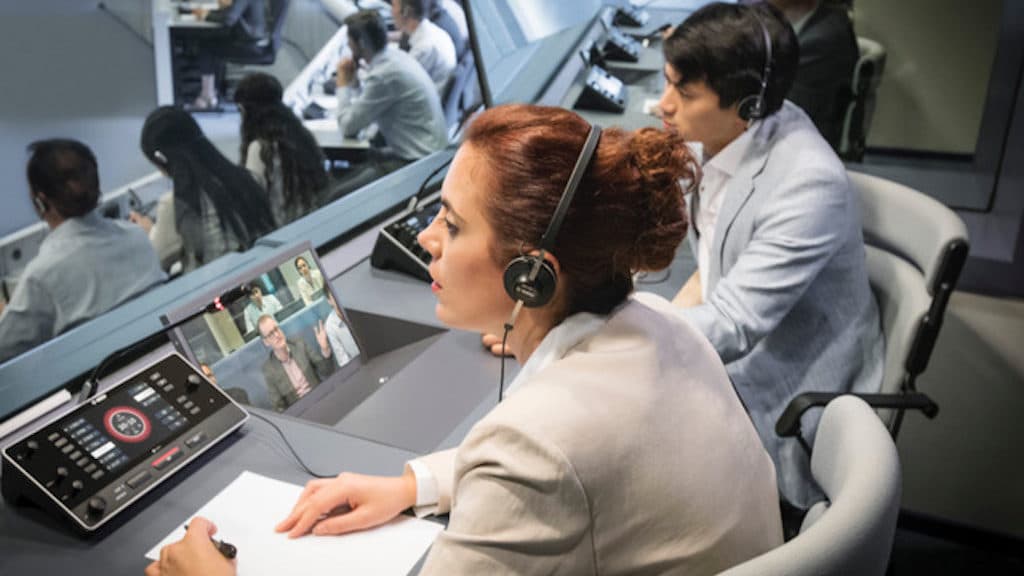
Liège's hospitals - CHU de Liège and Clinique Sainte-Marguerite - serve a provincial capital with a diverse population shaped by decades of industrial immigration. Professional medical interpreting in Liège enables safe clinical communication for patients of Arabic, Dutch, Turkish and English-speaking backgrounds who cannot communicate fully in French, the working language of all Walloon healthcare institutions.
Liège's healthcare landscape and linguistic diversity
Liège, capital of the province of the same name, is a major industrial and academic city in eastern Wallonia, bordering Germany and the Netherlands. Its economy has deep roots in steel, coal and metallurgy, and its population includes substantial communities of migrants from Morocco, Italy, Turkey, Spain and, more recently, sub-Saharan Africa who came to work in the region's heavy industries. Many of these communities maintain their language of origin - particularly Arabic (Moroccan Darija) and Turkish - as the primary language for sensitive or complex communication.
Liège's proximity to the Dutch-speaking border region also generates demand for Dutch-French medical interpreting, as some patients from Dutch-speaking areas or Flemish Belgium may be referred to CHU de Liège for specialist treatments or may live in the cross-border region around Maastricht and Aachen.
CHU de Liège: a leading academic medical centre
The Centre Hospitalier Universitaire de Liège (CHU de Liège) is affiliated with the University of Liège (ULiège) and is one of Wallonia's most important academic hospitals, with major specialisms in oncology, cardiovascular medicine, neuroscience, transplantation and geriatrics. The CHU de Liège serves as the principal tertiary referral centre for the province of Liège and for parts of the province of Luxembourg, drawing patients from a broad geographic area with correspondingly diverse linguistic backgrounds.
Clinique Sainte-Marguerite and specialist clinics
Clinique Sainte-Marguerite and other specialist clinics in the Liège region serve patients with mental health needs, addiction issues and complex chronic conditions - contexts in which professional medical interpreting is particularly important. Mental health care conducted through an inadequate interpreter, or through a family member who may have their own interests in the patient's care, can be clinically and ethically compromised. Our interpreters for psychiatric and psychological contexts in Liège are trained in mental health communication.
TranslateBE
Medical interpreters for CHU de Liège and Liège clinics
We provide professional medical interpreters for Liège's main hospital and specialist clinics - covering FR-AR-NL-TR-EN for consultations, diagnoses and consent procedures.
Language pairs for medical interpreting in Liège
- French-Arabic: the most frequently requested pair, covering the large Moroccan community in Liège and the province, as well as more recently arrived Arabic-speaking migrants and asylum seekers.
- French-Dutch: for Flemish-speaking patients referred to CHU de Liège, for Dutch-speaking patients from the Belgian-Dutch border region, and for Flemish families with relatives admitted to Liège hospitals.
- French-Turkish: for the established Turkish community in Liège and surrounding industrial communes such as Seraing and Herstal.
- French-English: for international students at the University of Liège, Erasmus students and English-speaking expats in the region.
Cross-border care: the German-speaking community
Liège province borders the German-speaking Community of Belgium - Belgium's smallest community with its own healthcare institutions. Some German-speaking Belgian patients are referred to CHU de Liège for specialist treatment, requiring German-French medical interpreting. Similarly, patients from the German and Dutch border regions near Aachen and Maastricht occasionally receive care at Liège hospitals. We provide German-French and Dutch-French medical interpreters for these cross-border care contexts.
FAQ
Frequently asked questions
Can you provide an Arabic medical interpreter for an oncology consultation at CHU de Liège?
Yes. Oncology consultations - covering diagnosis, treatment options, chemotherapy protocols and palliative care - are among the most critical contexts for professional medical interpreting. We provide Arabic-French medical interpreters for consultations at CHU de Liège's oncology department, selected for their experience with oncology terminology and their ability to communicate difficult clinical information accurately and sensitively. Please book as early as possible and provide the consultation date, department and specific clinical context.
Are your interpreters available for mental health assessments at Clinique Sainte-Marguerite Liège?
Yes. Mental health assessments, psychiatric consultations and psychotherapy sessions with a professional interpreter require extraordinary care for confidentiality, impartiality and sensitivity. Our interpreters for psychiatric contexts in Liège are specifically selected for their training in mental health communication and for their understanding of the ethical requirements governing interpreting in this sensitive clinical environment. They do not filter, summarise or comment on clinical content, and they maintain absolute confidentiality regarding the patient's mental health history.
Can you provide a Dutch-French medical interpreter for a Flemish patient referred to CHU de Liège?
Yes. Dutch-French medical interpreting for Flemish patients referred to CHU de Liège - for example, for specialist oncology, cardiology or transplantation treatment - is a service we provide regularly. The interpreter can accompany the patient for the initial consultation, treatment planning meetings, procedure-related appointments and follow-up sessions. Continuity with the same interpreter across multiple visits is available on request. Contact us with the appointment details and we will confirm availability promptly.