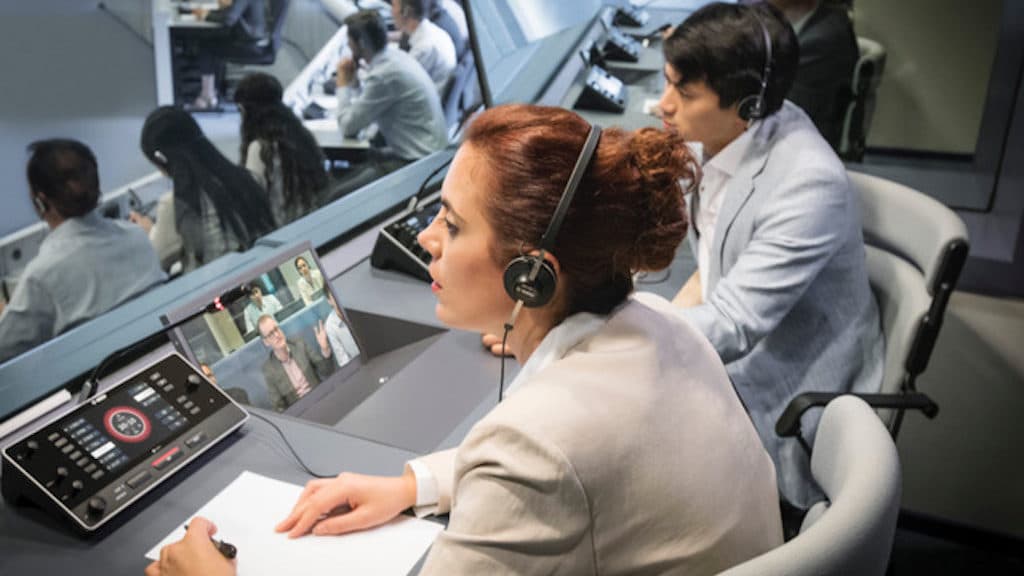
Que vous soyez convoqué devant le tribunal correctionnel de Bruxelles, engagé dans une procédure d'arbitrage commercial ou placé en garde à vue, le recours à un interprète judiciaire en Belgique obéit à des règles précises. Entre le barème officiel fixé par l'arrêté royal du 18 novembre 1998 et les tarifs du marché pour un interprète judiciaire privé, les écarts sont considérables. Ce guide vous donne les chiffres réels.
Interprète commis par le tribunal vs. interprète privé : deux réalités tarifaires
En Belgique, lorsqu'un tribunal commet d'office un interprète, celui-ci est rémunéré selon le barème de l'arrêté royal du 18 novembre 1998, modifié à plusieurs reprises depuis lors. Ce barème officiel prévoit un taux horaire compris entre 30 et 50 euros de l'heureselon la langue et le type de juridiction, auquel s'ajoutent une indemnité kilométrique (fixée à 0,42 euros/km au tarif de la fonction publique) et une vacation minimale de deux heures. Ces tarifs sont directement imputés aux frais de justice et avancés par l'État belge.
La situation est radicalement différente lorsqu'une partie fait appel à un interprète privé, à ses propres frais, pour renforcer sa défense ou assurer une qualité d'interprétation supérieure. Le marché privé de l'interprétation judiciaire en Belgique se situe entre 80 et 150 euros de l'heure, hors frais de déplacement. Cette fourchette s'explique par les exigences de qualification : inscription sur la liste officielle du SPF Justice, formation juridique complémentaire, maîtrise du vocabulaire procédural dans les deux langues, et disponibilité pour des audiences dont l'heure de fin est rarement prévisible.
TranslateBE
Interprète judiciaire certifié pour vos procédures en Belgique
Inscrit sur la liste officielle SPF Justice, disponible pour audiences, gardes à vue et arbitrages. Devis en 1 heure.
Obtenir un devisLes types de missions judiciaires et leurs spécificités
L'interprétation judiciaire recouvre des contextes très variés, chacun avec ses propres contraintes de vocabulaire, de rythme et de pression psychologique.
- Police et parquet : premières auditions, procès-verbaux, interrogatoires en présence d'un officier de police judiciaire. L'interprète doit retranscrire fidèlement, sans résumer, et signer chaque page du PV. La convocation peut survenir à n'importe quelle heure.
- Juge d'instruction : interrogatoires dans le cadre d'une information judiciaire, confrontations, perquisitions avec présence d'un interprète. Les dossiers sont souvent volumineux et la confidentialité absolue est requise.
- Audience correctionnelle : tribunal correctionnel de première instance (Bruxelles, Anvers, Gand, Liège). Durée variable d'une demi-heure à plusieurs jours. L'interprète travaille en consécutive ou en chuchotage selon la configuration de la salle.
- Cour d'appel : juridiction de second degré, vocabulaire procédural plus technique, rythme plus soutenu. La durée d'audience est généralement plus longue.
- Arbitrage commercial : procédure privée devant le Centre Belge d'Arbitrage et de Médiation (CEPANI) ou l'ICC. Les parties choisissent librement leur interprète et les tarifs sont librement négociés, généralement en journée complète.
Exigences de qualification : la liste officielle du SPF Justice
Depuis la loi du 10 avril 2014 portant insertion d'un titre Ibis dans le Code judiciaire, les interprètes judiciaires doivent être inscrits sur la liste nationale gérée par le SPF Justice et accessible via la plateforme e-Justice. L'inscription requiert : une vérification de compétences linguistiques (niveau C2), une attestation de moralité, l'absence de condamnation pénale incompatible avec l'exercice de la mission, et une formation aux droits fondamentaux et au secret professionnel.
Un interprète non inscrit sur cette liste peut techniquement intervenir dans certaines procédures civiles ou arbitrages, mais ne peut être commis d'office par une juridiction pénale. Pour les parties qui souhaitent recourir à un interprète privé devant une juridiction pénale, il est fortement recommandé de choisir un professionnel figurant sur la liste officielle, gage de qualité et de crédibilité auprès du juge.
Structure tarifaire : comment se calcule une prestation judiciaire
Contrairement à la traduction facturée au mot-source, l'interprétation judiciaire se facture à l'heure ou à la demi-journée avec les composantes suivantes.
- Taux horaire de base : 80 à 150 euros selon la langue et la juridiction, avec une vacation minimale de deux heures même si l'audience est plus courte.
- Indemnité kilométrique : 0,42 euros par kilomètre aller-retour depuis le domicile ou le bureau de l'interprète, conformément au barème véhicule de la fonction publique belge.
- Temps d'attente : les audiences débutent rarement à l'heure prévue. Le temps d'attente dans les couloirs du palais de justice est facturable, généralement au même taux horaire ou à un taux réduit convenu à l'avance.
- Frais de parking et transports en commun : facturés sur justificatif pour les audiences dans les grandes villes (Bruxelles, Anvers, Gand, Liège).
- Majoration urgence nuit et week-end : de 50 à 100% du taux horaire de base pour les convocations de nuit (après 22h), les interventions le samedi (majoration 50%) et le dimanche ou jours fériés (majoration 100%).
Pour une audience correctionnelle standard d'une demi-journée à Bruxelles, le coût total d'un interprète privé se situe généralement entre 350 et 600 euros, frais de déplacement inclus. Une journée complète devant la Cour d'appel peut atteindre 800 à 1 400 euros selon la langue et la durée effective.
Tableau des tarifs interprétation judiciaire en Belgique
| Type de prestation | Tarif indicatif | Remarque |
|---|---|---|
| Audience tribunal correctionnel (demi-journée) | 350 - 600 € | Vacation min. 2h, frais kilométriques inclus |
| Audience Cour d'appel (journée complète) | 800 - 1 400 € | Journée = 8h effectives, pauses non déduites |
| Audition police / parquet (convocation) | 200 - 400 € | Vacation min. 2h, disponibilité sous 4h possible |
| Arbitrage commercial (CEPANI / ICC) | 900 - 1 600 €/jour | Tarif libre, dossier technique souvent fourni |
| Urgence nuit / week-end / jour férié | Taux de base +50 à +100% | Majoration appliquée sur le taux horaire convenu |
Langues et disponibilité : ce que le marché belge peut offrir
La Belgique est un pays multilingue avec des flux migratoires importants, ce qui génère une demande d'interprétation judiciaire dans des dizaines de langues. Les langues les plus couramment demandées devant les juridictions belges sont : l'arabe (marocain et classique), le turc, le polonais, le roumain, l'albanais, le néerlandais (pour les procédures en français et vice versa), l'anglais et le russe. Pour ces langues, la disponibilité est généralement bonne et les délais de mobilisation de 24 à 48 heures sont réalistes.
Pour les langues moins répandues (pachtoun, somali, tigrigna, amharique, ourdou), la liste officielle du SPF Justice compte peu de professionnels inscrits. Dans ces cas, les délais de mobilisation peuvent dépasser 72 heures et un supplément tarifaire de 20 à 40% est fréquent pour compenser les frais de déplacement supplémentaires.
Interprétation judiciaire et droit au procès équitable
L'article 6 de la Convention européenne des droits de l'homme garantit à tout accusé qui ne comprend pas la langue de la procédure le droit d'être assisté gratuitement d'un interprète. En Belgique, ce droit est mis en oeuvre par la loi Salduz du 13 août 2011 (assistance à l'audition policière), complétée par la directive 2010/64/UE relative au droit à l'interprétation et à la traduction dans les procédures pénales.
Concrètement, cela signifie que dans une procédure pénale, l'État belge prend en charge les frais d'interprétation. En revanche, dans les litiges civils et commerciaux, les parties doivent en principe se comprendre mutuellement et, si elles font appel à un interprète privé, en assumer le coût elles-mêmes.
TranslateBE · Agence certifiée
Réservez votre interprète judiciaire - Devis en 1 heure
Interprètes inscrits sur la liste SPF Justice, disponibles pour toutes les juridictions belges. Tarifs transparents, mobilisation sous 24h.
FAQ
Questions fréquentes
Peut-on refuser l'interprète commis par le tribunal ?
Techniquement, une partie peut exprimer des réserves sur l'interprète commis, notamment si elle estime qu'il y a un conflit d'intérêts ou une incompétence manifeste. Le juge apprécie souverainement. Il est cependant difficile d'imposer le remplacement sans motif sérieux et documenté. Si la qualité de l'interprétation vous préoccupe, la solution la plus efficace est de demander à votre avocat de solliciter un interprète privé de votre choix, à vos frais, qui travaillera en parallèle pour contrôler la fidélité de l'interprétation officielle.
La partie peut-elle amener son propre interprète devant le tribunal ?
Oui, une partie peut présenter un interprète privé, sous réserve de l'accord du juge. En pratique, devant les juridictions pénales, c'est le tribunal qui désigne l'interprète officiel depuis la liste SPF Justice, mais rien n'interdit à la défense de mandater un second interprète pour contrôle. En matière civile et commerciale, les parties sont plus libres dans leur choix. Il est recommandé de prévenir la juridiction à l'avance et de préciser que l'interprète privé est là en qualité d'assistant de la partie, et non comme interprète officiel de la procédure.
Qui paie l'interprète en cas de garde à vue ?
En garde à vue, le cadre légal est celui de la loi Salduz et de la directive 2010/64/UE : la personne gardée à vue a droit à un interprète gratuitement, aux frais de l'État belge, pour toute la durée de l'audition policière. Cet interprète est requis par les services de police via la liste officielle du SPF Justice. Si la personne garde à vue souhaite un interprète différent, de confiance personnelle, elle peut en mandater un à ses frais - mais cet interprète privé n'assistera pas aux auditions policières officielles, seulement aux consultations avec son avocat.
Les tarifs sont-ils négociables pour une longue procédure ?
Oui, pour les procédures longues (plusieurs audiences étalées sur des semaines ou des mois), il est courant de négocier un tarif journalier forfaitaire avec l'interprète ou l'agence, plutôt qu'un tarif à l'heure. Un abattement de 10 à 20% est fréquent pour un engagement de plus de 5 journées d'audience. Il est également possible de retenir un interprète en exclusivité pour la durée du procès, ce qui garantit la disponibilité et la continuité terminologique, moyennant une rémunération de disponibilité même les jours sans audience. Consultez-nous pour un devis sur mesure adapté à votre calendrier judiciaire.