Conférence internationale, réunion d'affaires avec un partenaire étranger, rendez-vous médical, audience judiciaire... Toutes ces situations n'appellent pas le meme type d'interprète. Ce guide vous aide a identifier quand vous en avez vraiment besoin - et lequel choisir selon votre situation.
Interprétation et traduction : deux métiers distincts
Avant tout, il est utile de rappeler une distinction fondamentale que beaucoup confondent : le traducteur travaille sur des textes écrits, le plus souvent en différé. L'interprète travaille a l'oral, en temps réel. Ces deux métiers requièrent des compétences différentes et ne sont pas interchangeables.
Un excellent traducteur n'est pas nécessairement un bon interprète, et vice-versa. L'interprétation exige une concentration intense, une mémoire de travail exceptionnelle, une parfaite maitrise du sujet traité et une capacité a reformuler instantanément dans une autre langue sans altérer le sens ou la nuance.
💡 Bon à savoir
En Belgique, les interprètes intervenant dans des contextes judiciaires ou officiels doivent etre agréés - a l'instar des traducteurs assermentés pour les documents écrits. Pour toute procédure légale, exigez la présentation de l'accréditation officielle de l'interprète.
Les différents types d'interprétation expliqués
L'interprétation simultanée
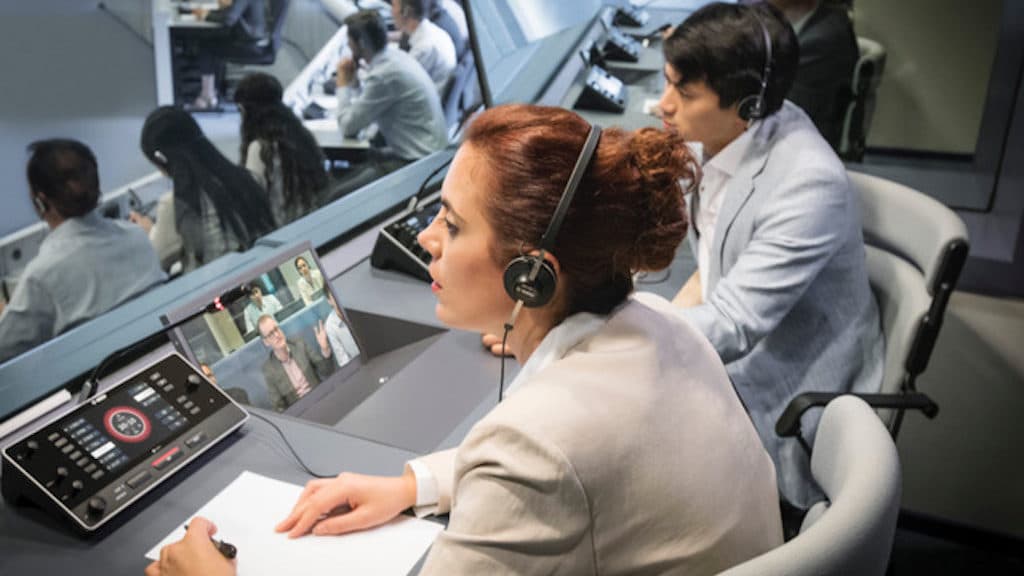
L'interprète traduit en temps réel, quasiment au meme moment que l'orateur parle, via un système de cabines et d'écouteurs. C'est la technique utilisée pour les grandes conférences, les congrès internationaux et les événements multilingues.
Elle requiert un équipement technique spécifique (cabines insonorisées, système de transmission) et est tellement exigeante cognitivement que les interprètes travaillent en binome, en alternant toutes les 20 a 30 minutes. C'est la forme d'interprétation la plus onéreuse mais aussi la plus fluide pour les participants.
L'interprétation consécutive
L'orateur parle, puis s'arrête pour laisser l'interprète reformuler son propos dans l'autre langue. L'interprète prend des notes pendant la prise de parole (grâce a une technique de notation spécialisée) et restitue ensuite l'ensemble du discours.
C'est la technique idéale pour les réunions d'affaires bilatérales, les négociations, les conférences de presse, les discours officiels courts. Elle ne nécessite pas d'équipement particulier mais double approximativement le temps nécessaire pour chaque prise de parole.
L'interprétation de liaison (chuchotée)
L'interprète traduit a voix basse, directement a l'oreille d'une ou deux personnes, en temps réel. Cette technique est utilisée pour des entretiens individuels, des visites d'entreprise, des rendez-vous médicaux, des accompagnements en réunion.
Elle est moins fatigante que la simultanée et ne nécessite pas d'équipement (sauf parfois un petit système de chuchotage pour les groupes de 3 a 5 personnes). C'est souvent la solution la plus accessible pour les petites structures.
L'interprétation judiciaire
Un domaine a part entière, exigeant une accréditation spécifique. L'interprète judiciaire intervient lors d'audiences, d'interrogatoires, de médiations ou de procédures d'instruction. Il doit maitriser la terminologie juridique des deux systèmes légaux concernés et peut etre tenu de preter serment. En Belgique, ces interprètes sont inscrits sur la liste officielle du SPF Justice.
TranslateBE
Vous avez besoin d'un interprète professionnel ?
TranslateBE met a votre disposition des interprètes qualifiés pour toutes les situations. Devis gratuit sous 1h.
Demander un devis gratuitSituations concrètes : quel interprète pour quel contexte ?
| Situation | Type d'interprétation | Délai de réservation conseillé |
|---|---|---|
| Conférence internationale (50+ participants) | Simultanée en cabine | 4 a 8 semaines |
| Congrès ou séminaire (20-50 participants) | Simultanée ou consécutive | 3 a 6 semaines |
| Réunion d'affaires bilatérale | Consécutive ou liaison | 1 a 2 semaines |
| Négociation commerciale | Consécutive | 1 a 2 semaines |
| Entretien médical ou consultation | Liaison | 48h a 1 semaine |
| Audience judiciaire ou administrative | Judiciaire (assermentée) | Dès réception de la convocation |
| Démarche administrative (commune, administration) | Liaison | 2 a 5 jours |
| Visite d'entreprise ou salon professionnel | Liaison ou chuchotage | 1 a 2 semaines |
| Événement culturel ou sportif | Selon format | 2 a 4 semaines |
Situations spécifiques qui nécessitent impérativement un interprète
Les procédures judiciaires et administratives officielles
En Belgique, toute personne qui ne comprend pas la langue de la procédure a le droit a un interprète lors d'une audition, d'une audience ou d'un interrogatoire. Ce droit est garanti par la loi et par la Convention européenne des droits de l'homme. Si une personne est impliquée dans une procédure judiciaire sans comprendre la langue, l'absence d'interprète peut constituer un vice de procédure.
Les entretiens médicaux et les consentements éclairés
Un patient qui ne comprend pas ce que lui dit son médecin ne peut pas donner un consentement éclairé aux soins. Pour les opérations, traitements lourds, annonces de diagnostic grave ou décisions médicales complexes, un interprète professionnel - et non un membre de la famille - est indispensable. Les professionnels de santé le savent : un proche en situation émotionnelle n'est pas un interprète fiable.
Les entretiens d'embauche et de recrutement international
Pour recruter un candidat étranger ou dans une entreprise multinationale, un interprète permet de dépasser la barrière linguistique et d'évaluer les compétences réelles du candidat sans biais lié a la langue. La qualité de l'interprétation influence directement la qualité de la décision de recrutement.
Quand peut-on se passer d'un interprète professionnel ?
Il serait excessif de dire qu'un interprète est toujours nécessaire. Voici les situations ou une autre solution peut suffire :
- Niveau de langue suffisant des deux parties : si vous et votre interlocuteur maitrisez tous les deux correctement une langue commune (souvent l'anglais dans un contexte international), aucun interprète n'est nécessaire pour des discussions non spécialisées
- Échanges informels ou exploratoires : pour une première prise de contact ou une réunion ou aucune décision importante n'est prise, un niveau de langue fonctionnel peut suffire
- Documents écrits uniquement : si la communication se fait uniquement par écrit (emails, contrats, rapports), vous avez besoin d'un traducteur, pas d'un interprète. Notre service de traduction professionnelle couvre ces besoins
💡 Bon à savoir
Le recours a un proche bilingue comme interprète improvise est très courant, mais risqué. Outre les lacunes potentielles en terminologie spécialisée, un proche est rarement neutre émotionnellement et peut (inconsciemment) filtrer, atténuer ou reformuler l'information. Dans un contexte médical, judiciaire ou commercial, les conséquences peuvent etre sérieuses.
FAQ
Questions fréquentes
Quelle est la différence entre un interprète et un traducteur ?
Le traducteur travaille sur des textes écrits, souvent en différé, avec le temps de rechercher les termes précis et de réviser son travail. L'interprète travaille a l'oral, en temps réel, sans possibilité de correction ou de consultation. Ces deux métiers nécessitent des compétences distinctes et les professionnels se spécialisent généralement dans l'un ou l'autre.
Combien coute une demi-journée d'interprétation ?
Les tarifs varient selon le type d'interprétation, la langue et le niveau d'expertise requis. Pour une interprétation de liaison ou consécutive sur demi-journée (4h), comptez généralement entre 300 et 600 euros pour les langues courantes. La simultanée en cabine est plus onéreuse car elle nécessite deux interprètes et un équipement technique spécifique. Contactez-nous pour un devis précis selon votre situation.
Un interprète judiciaire peut-il etre refusé par le tribunal ?
Si l'interprète n'est pas agréé par le SPF Justice ou n'est pas sur la liste officielle des traducteurs-interprètes jurés, le tribunal peut refuser son intervention. Pour toute procédure judiciaire, demandez toujours un interprète agréé et vérifiez son accréditation. Une agence sérieuse ne vous proposera que des profils habilités pour ce type de mission.
Peut-on réserver un interprète pour une seule heure ?
Techniquement oui, mais la plupart des agences appliquent un minimum de facturation (généralement une demi-journée de 4h) car les interprètes se déplacent et bloquent leur agenda sur une plage horaire. Pour des missions très courtes (1h), certaines agences proposent des tarifs horaires dégres-sifs ou des solutions d'interprétation a distance (visioconférence, téléphone) qui sont plus souples en termes de durée.
Vous avez besoin d'un interprète qualifié ?
TranslateBE vous propose des interprètes certifiés pour toutes situations : réunions, conférences, médical, judiciaire. Devis sous 1h.